Quiz Blitz: Test Brain Game
Quiz & Trivia Games by Mno Go AppsTrivia
4.8832.00 Reviews
- Version
- 2.14.206
- Installs
- 1.00M
- Age Rating
- Everyone
Screenshots
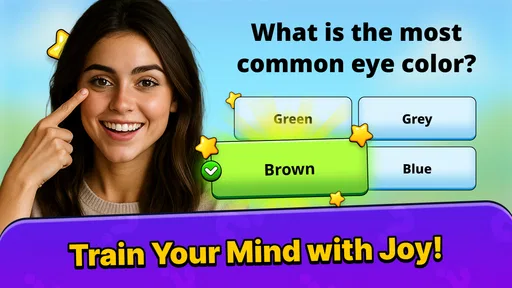
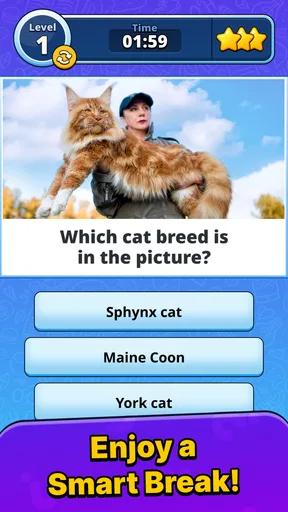
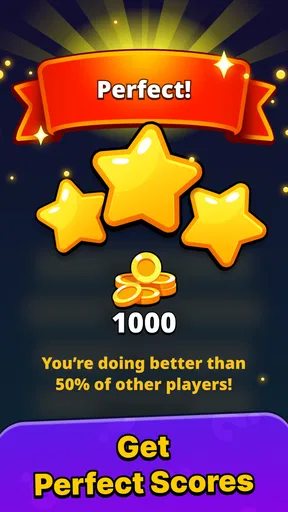
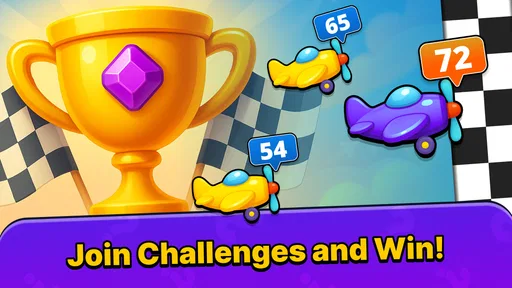
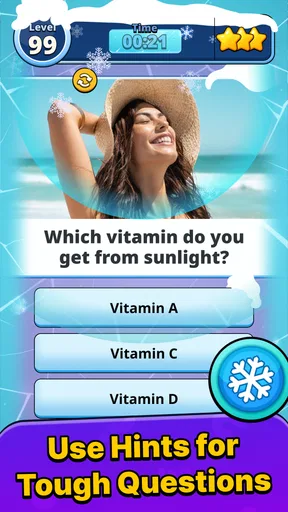
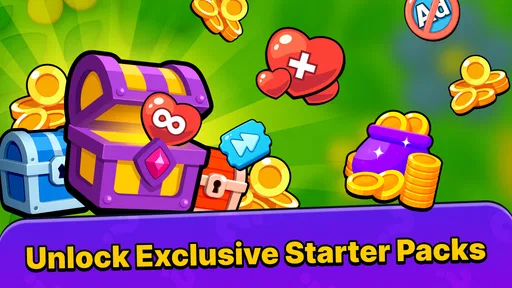
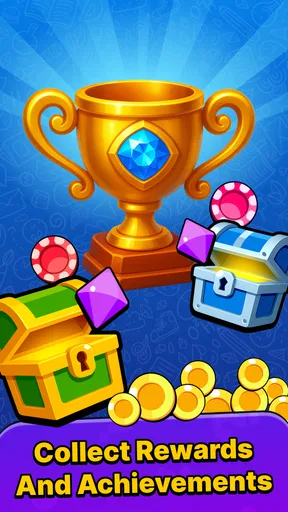
Our Review of Quiz Blitz: Test Brain Game
 Analysis by Appyee
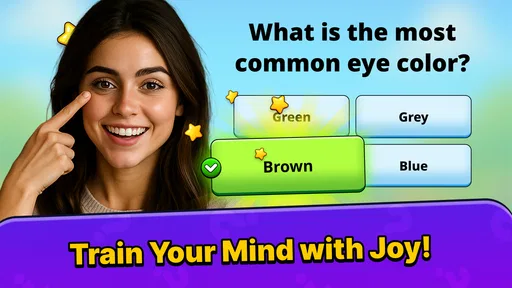
Quiz Blitz: Test Brain Game is the kind of trivia title I can open for a short mental break without needing to learn a complicated system first. It presents question-based challenges in a quick, approachable format, and I found the basic loop easy to understand from the first session: read a question, choose an answer, see how I did, and move on to the next challenge. That simplicity is its biggest strength, but it also means the experience depends heavily on whether you enjoy repeated general-knowledge testing.
The game comes from Quiz & Trivia Games by Mno Go Apps and sits in the trivia category. It is free to start, aimed at Everyone, and requires Android 6.0 or later. The current release is version 2.8.035. Those details make it accessible on a wide range of Android devices, including older phones that may struggle with more visually demanding games.
How I use Quiz Blitz for a reliable everyday quiz routine
My preferred way to play is not to treat every round like a serious exam. I use it in small sessions: a few questions while waiting for an appointment, during a coffee break, or when I want something more active than scrolling through social media. The short-question format suits that routine because I can stop after a small burst without losing the point of the session.
The most useful baseline habit is to answer first and analyze second. When I hesitate too long, I tend to talk myself out of an answer I initially recognized. Instead, I read the full question, identify the subject, eliminate obviously unsuitable choices, and make a decision. This keeps the game moving and gives me a more honest picture of what I know under light time pressure.
I also recommend separating knowledge gaps from careless mistakes. If I miss a question because I have never learned the fact, I mentally file it as something new. If I miss because I skimmed the wording or confused two similar options, the lesson is different: slow down slightly on the next question. That distinction makes repeat play more useful than simply chasing a better result.
For a family setting, the game works best when people take turns answering aloud rather than passing one phone around too quickly. A parent can use questions as conversation starters, while children can explain why they chose an answer. The Everyone rating makes that kind of casual shared use feel appropriate, although younger players may still need help with unfamiliar vocabulary or topics.
For solo play, I find it helpful to create a simple stopping rule. For example, I might finish a short session after a run of questions or stop when I notice that I am guessing without reading carefully. This prevents the familiar trivia problem of continuing only because I want to repair one disappointing result. The game is more enjoyable when I treat each session as practice rather than a verdict on my intelligence.
What the first sessions reveal about the format
The central appeal is variety. Trivia can move between subjects quickly, so a strong general-knowledge player may feel confident one moment and completely out of depth the next. I like that unevenness because it keeps the experience from becoming a narrow test of one specialty. It also means that a single poor result should not be taken too seriously.
At the same time, this is not the best choice for someone looking for a long-form puzzle adventure, a story, or a competitive multiplayer environment. Its value comes from answering questions, not from building a character, exploring a world, or managing a deep strategy system. Players who need constant visual progression may find the straightforward presentation less gripping than a larger game.
The store summary positions it as a daily brain challenge, and that description matches how I get the most from it. I would not use it as a formal intelligence test. A trivia result reflects memory, familiarity with the subject, wording, and luck in the questions that appear. Used as a daily mental warm-up, however, it gives me a pleasant reason to recall facts and notice where my knowledge is thin.
Settings and small choices worth checking before settling in
Before making the game part of a routine, I would spend a minute looking through whatever basic options are available on the device and in the game interface, especially sound and notification behavior. A trivia session in a quiet library or shared office should not interrupt other people, while a session at home may be more enjoyable with audible feedback. I prefer to remove distractions when I am trying to concentrate and keep the experience quiet when playing in public.
I also check how the game behaves when I leave it briefly. A practical workflow is to pause between questions rather than closing the app in the middle of an answer. If I know I may be interrupted, I start a fresh short session instead of assuming that an unfinished round will remain exactly where I left it. This is a small habit, but it avoids frustration when a quick break turns into a longer one.
Because the game is free to start but includes optional purchases ranging from $0.59 to $129.99 per item, I would review purchase controls before handing the phone to a child. The wide range makes it sensible to use device-level purchase protection and avoid treating any on-screen offer as part of the basic quiz. I see this as a practical safeguard, not a reason to reject the game outright.
Another useful adjustment is deciding what “good play” means before beginning. If I want relaxation, I answer naturally and accept mistakes. If I want learning, I pause after difficult questions and try to explain the answer in my own words. If I want speed, I focus on reading the key nouns and verbs in each question. The same app feels different depending on that intention, and setting it beforehand stops me from judging a casual session by a competitive standard.
I would also keep the phone’s battery and screen settings in mind. Trivia does not need a bright display or high performance, so a lower brightness level is usually enough for comfortable reading. On a smaller screen, I take a moment to read every option completely instead of tapping the first familiar phrase. That is especially important when two answers look almost alike.
Faster patterns that improve accuracy without turning play into a chore
Experienced quiz players often develop a repeatable reading pattern, and I found that useful here. I first identify what the question is asking for: a person, place, date, definition, cause, or comparison. Then I scan the answers for category mismatches. An option that belongs to the wrong type of thing can often be removed immediately, leaving a smaller decision to make.
When two answers remain, I avoid relying only on which one “sounds familiar.” I look for the exact relationship between the question and each option. A familiar name may be associated with the topic but still not answer the question being asked. This habit reduces errors caused by recognition without understanding, one of the most common traps in general trivia.
I use a three-pass approach for harder questions. On the first pass, I answer only when the fact is clear. On the second, I eliminate choices that conflict with the wording or subject. On the third, I select the remaining answer and move on. I do not spend an unlimited amount of time on one question, because overthinking can make a short quiz feel tiring and does not necessarily produce better reasoning.
A particularly useful routine is to keep a mental list of recurring weak areas. If I repeatedly struggle with geography, science terms, or historical names, I do not try to memorize every missed answer immediately. Instead, I note the theme and look for connections between questions. Remembering a fact as part of a subject is more durable than memorizing an isolated answer that may never appear again.
I also recommend playing at different times of day if the goal is self-awareness. A morning session may show careful recall, while a late-night session may reveal how much fatigue affects reading accuracy. I would not compare those results as if they came from identical conditions. The game can be a useful mirror for attention, but only if I account for the circumstances around each session.
For a group, a good shortcut is to have everyone commit to an answer before anyone explains their reasoning. That stops the most confident person from influencing the others too early. After the answer is revealed, comparing the reasons is more interesting than simply announcing who was right. It turns a quick quiz into a lightweight discussion without requiring a separate party-game system.
Where the game is strong compared with ordinary trivia alternatives
Compared with a printed question book, Quiz Blitz is more convenient for spontaneous play. I do not need to prepare a stack of cards or find a partner. The phone is already with me, and the question format makes it easy to begin and stop. That convenience is the main reason I would choose it over a traditional book for short breaks.
Compared with a search engine, it is better when I want to test myself honestly. Looking up facts gives me information, but it does not reveal whether I could recall the answer without help. A quiz creates a small commitment before the answer appears. For me, that makes the activity more engaging than browsing random facts, even though a search engine remains better when I need a detailed explanation or a source.
Compared with large trivia platforms built around live competition, this game is a better fit for people who want a calmer individual session. I do not need to coordinate with friends or wait for a scheduled match. The trade-off is that players seeking social pressure, rankings, or a strong community layer may prefer a dedicated multiplayer alternative.
Compared with educational apps that teach one subject systematically, Quiz Blitz offers breadth rather than a structured course. It can show me that I need to improve in a topic, but it is not a replacement for a textbook, language course, or science lesson. I use it to identify curiosity and weaknesses, then turn to a more focused resource when I want depth.
The rating of 4.8 from around 57 thousand ratings and more than 500 thousand installs suggests that the accessible quiz format has found a substantial audience. I treat that popularity as useful context rather than proof that it will suit everyone. A highly rated casual trivia game can still feel repetitive to someone who wants a campaign, detailed explanations, or a more specialized challenge.
Limits that become clearer after regular use
The biggest limitation is the natural ceiling of a question-and-answer loop. Once the novelty of the format fades, enjoyment depends on the quality and variety of the questions that appear. If I play for too long in one sitting, the experience can start to feel like repetition rather than discovery. Short sessions are not merely convenient here; they help preserve the game’s energy.
Another limitation is that a wrong answer does not automatically become a lesson. A quiz can tell me that I missed something, but learning requires an extra step: checking the explanation if one is available, researching the subject elsewhere, or deliberately revisiting the idea later. Players expecting every question to provide a mini-lesson may find the format less satisfying than a dedicated learning app.
The free entry point is welcome, but optional purchases deserve attention. I would not make a purchase simply to repair a bad run or satisfy impatience. If the game presents paid options during play, I would decide in advance whether I am willing to spend anything and keep that boundary firm. The core appeal is answering questions, so spending should never become the reason I continue a session.
The age rating of Everyone makes it broadly approachable, but “suitable for everyone” does not mean every question will be equally understandable. Reading level, cultural familiarity, and previous education all affect performance. I would play alongside a younger user rather than assuming a low score means a lack of ability. Sometimes the real obstacle is the wording, not the knowledge.
I would also skip this game if my main goal is verified study material. Trivia is excellent for prompting recall and curiosity, but it is not the format I would trust as my only preparation for an exam or professional subject. For that purpose, I would choose a focused educational tool with lessons, explanations, and a clear learning sequence.
Who should make it part of a daily routine
I think Quiz Blitz is particularly well suited to casual players who enjoy general knowledge, people who want a low-pressure brain break, and families looking for a simple question game that does not require complicated instructions. It also suits anyone with an older Android phone, since the minimum operating-system requirement is Android 6.0.
It is less suitable for players who need a strong sense of progression, deep customization, a story, or sustained competition. If I wanted to spend an entire evening inside one evolving game world, I would choose something else. If I wanted to master a single subject, I would use a specialized learning platform alongside it rather than expecting this trivia game to do all the teaching.
My practical recommendation is to install it with a clear purpose: use it for short recall practice, social questions, or a daily mental reset. Keep purchase controls in place, adjust the sound for the setting, and stop before tired guessing replaces attentive play. Those habits make the free format feel more useful and reduce the small frustrations that can otherwise grow during repeated sessions.
My verdict after building a repeatable quiz habit
Quiz Blitz: Test Brain Game succeeds because it does not make trivia feel like homework. I can open it quickly, answer a handful of questions, and leave with either a small confidence boost or a new subject to explore. The developer, Quiz & Trivia Games by Mno Go Apps, has focused the experience on an uncomplicated question routine rather than surrounding it with unnecessary complexity.
Its strongest use is as a compact daily challenge, not as a complete education product or a substitute for a competitive trivia community. The best results come from combining a careful reading pattern, sensible session limits, device purchase protection, and a willingness to investigate interesting mistakes afterward. Those choices turn a basic quiz loop into a more deliberate habit.
I would recommend it to a friend who wants free, accessible trivia for spare moments and does not need a story or elaborate progression. I would warn that long sessions may become repetitive, that optional purchases require attention, and that missed answers will not automatically teach themselves. With those expectations in place, Quiz Blitz: Test Brain Game is an enjoyable, lightweight choice for testing general knowledge and keeping the mind engaged a few minutes at a time.
Privacy and Permissions
See what permissions an app requests and how it handles your data.
- Photos/Media/Files
- modify or delete the contents of your USB storage
- Storage
- modify or delete the contents of your USB storage
- Wi-Fi connection information
- view Wi-Fi connections
- Other
- view network connections, full network access, control vibration, prevent device from sleeping
Verdict
Strengths of Quiz Blitz: Test Brain Game
- Quick rounds make it easy to play during short breaks.
- Covers multiple trivia categories for varied quiz sessions.
- Simple controls are accessible for most players.
- Fast feedback helps players learn from incorrect answers.
- Competitive scoring adds motivation for repeat play.
Limitations of Quiz Blitz: Test Brain Game
- Some questions may feel too easy for experienced trivia fans.
- Difficulty can vary noticeably between categories.
- Timed questions may feel stressful rather than entertaining.
- Progress may depend heavily on memorizing recurring questions.
- Requires an internet connection for some features or content.
Other Releases by Quiz & Trivia Games by Mno Go Apps
View All
QuizzLand. Quiz & Trivia game
Trivia4.8

IQ & brain test: Triviascapes
Trivia4.8

Wood Quiz Blast: Trivia Blocks
Trivia4.8

Cross World: Word Riddles
Word4.8
Similar Picks in This Category
View All
Millionaire 2026 Quiz & Trivia
Quiz & Trivia Games by Submarine Apps4.5

Brain Test 2: Tricky Stories
Unico Studio4.7

Trivia Crack: Brain Quiz Games
etermax4.4
QuizzLand. Quiz & Trivia game
Quiz & Trivia Games by Mno Go Apps4.8

Brain Test: Tricky Puzzles
Unico Studio4.7

Logo Quiz
bubble quiz games4.5
Frequently Asked Questions
What is Quiz Blitz: Test Brain Game?
Quiz Blitz: Test Brain Game is a fast-paced trivia app designed to challenge your knowledge across multiple categories. Questions may cover subjects such as history, science, entertainment, geography, sports, and general knowledge. Its quick-answer format makes it suitable for short play sessions, while progression, scores, and increasingly difficult questions can encourage users to keep practicing and improving.
Is Quiz Blitz: Test Brain Game free to download and play?
Quiz Blitz: Test Brain Game can generally be downloaded without an upfront purchase, but the exact free features may vary depending on the Android or iOS version. The app may include advertisements, optional in-app purchases, extra lives, hints, or other premium items. Before downloading, check the store listing carefully for current pricing, subscriptions, and available purchase options.
Does Quiz Blitz: Test Brain Game require an internet connection?
The need for an internet connection may depend on the feature you want to use and the version installed on your device. Basic quiz rounds might work in limited offline situations, while advertisements, leaderboards, updates, cloud progress, or competitive features may require online access. It is best to test the app after installation rather than assuming every mode works offline.
Is Quiz Blitz: Test Brain Game suitable for children?
Quiz Blitz: Test Brain Game may be appropriate for older children and families because trivia can support memory, learning, and general knowledge. However, parents should review the app’s age rating, question content, advertising, privacy information, and in-app purchase settings before allowing independent use. Some categories may be more suitable for teenagers or adults than younger players.
What should I know about ads, purchases, and personal data?
Before starting Quiz Blitz: Test Brain Game, review the permissions and privacy details shown on the official app store page. Free quiz games commonly use advertising and may offer optional purchases for hints, lives, ad removal, or additional content. Avoid sharing unnecessary personal information, and use parental controls or purchase restrictions if the app will be used by children.
Play our best games!


